
Graza Olive Oil: How a Green Squeeze Bottle Turned Less Than US$3 Million Into a US$240 Million Brand
For decades, olive oil sold itself by imitating wine: dark glass, corks, foil seals, labels heavy with estates and harvest years. The unspoken instruction on every shelf was the same. This is precious. Do not use too much. Graza, launched in January 2022 out of Brooklyn, built its entire business on the opposite instruction. Its extra virgin olive oil comes in a bright green plastic squeeze bottle that lives next to the stove and gets used on everything, every day. Three years later, the brand is the fifth-largest national olive oil brand in the United States, with a retail footprint that has surged past 28,000 stores including Whole Foods, Target, Costco and Walmart, and was valued at roughly US$240 million in early 2025, on less than US$3 million of outside capital ever raised. In a category most investors write off as a commodity, that ratio deserves a closer look.

Who Buys Graza Olive Oil? The Home Cook Who Cooks on Camera
Graza's core buyer is the young home cook for whom cooking is partly a private pleasure and partly a public identity. She follows recipe creators on Instagram and TikTok, plates food that is meant to be photographed, and treats her pantry the way a previous generation treated its bookshelf: as a visible statement of taste. For this shopper, a beautiful, slightly cartoonish green bottle sitting on the counter is not storage. It is set decoration for the life she is broadcasting.
The second thing that defines this buyer is confusion, and Graza understood it better than the incumbents. Olive oil is one of the most confusing shelves in the supermarket: extra virgin versus refined, smoke points, regions, price tiers with no visible logic. Most shoppers resolve that confusion by either buying the cheapest bottle or overpaying for the fanciest one and then rationing it. Graza's entire product architecture is built to remove that anxiety rather than exploit it, which is precisely the opposite of how premium food brands usually behave.
It is the same structural insight that powered the community-era DTC brands: recruit the customer who wants to participate, not just purchase. Glossier built a billion-dollar valuation on exactly that user, and Graza's kitchen is what Glossier's vanity table was in 2018: a stage where the product performs daily and the audience is real.
What You Are Really Buying: A Pantry Staple Redesigned as a Tool
Strip away the branding and Graza olive oil is single-varietal Picual extra virgin olive oil from Jaén, Spain. Good oil, honestly sourced, but not a new invention. What is new is everything around it. The squeeze bottle, borrowed from diner ketchup and pastry kitchens, changes the physics of use: one hand squeezes while the other cooks, nothing drips down the side, and portioning stops feeling like spending. A product that dark glass taught consumers to ration became a product the packaging invites them to empty. Emptied bottles get repurchased.
The naming system does the shelf's job for it. Drizzle (US$21, 500 mL) is for finishing. Sizzle (US$16, 750 mL) is for cooking. A shopper who knows nothing about olive oil can stand in front of the shelf and choose correctly in five seconds, because the names are instructions rather than romance. In February 2025 the brand added Frizzle, a high-heat cooking oil that also introduced a spray format, completing a three-bottle system that covers essentially every drop of fat a home kitchen uses, and that retails as a trio without cannibalizing itself.
The sourcing story holds up under inspection, which matters more in food than in most categories. Each production lot is pressed from a single farm's harvest in Jaén, with the brand working across a roster of more than seventy independent farms over time. That is a more honest version of "single origin" than the label-deep claims common in the category, and it is operationally harder, because supply has to be re-curated every season. Line extensions have stayed close to this core: refill cans, glass versions for the customers who asked, a mayonnaise made with the brand's own oil, potato chips fried in extra virgin, and a first, limited step outside food: a holiday wine set released in late 2025.

Why It Worked: 300 Packages and Retail That Came Knocking
Graza launched with no advertising budget in the conventional sense. The founders sent 300 packages to food creators such as Molly Baz and Justine Doiron, sold out six months of inventory on launch day, and took a call from Whole Foods the following day. Those 300 packages were, in Andrew Benin's own words, the entire advertising spend for the first eight months. The bet was that a bottle designed to look good in a kitchen video would earn its own distribution, and it did: within a year Graza was on Whole Foods shelves nationwide, with Target, Costco and Walmart following.
The sequence matters more than the speed. The standard CPG playbook is to fight for shelf placement first and then spend heavily to pull demand through it. Graza inverted the order: it built cultural demand on social media and in food media first, and let retailers come inbound to capture demand that already existed. A brand that is invited onto the shelf negotiates from a fundamentally different position than a brand that begged its way on, on margins, on placement, and on how much promotional spend the retailer expects.
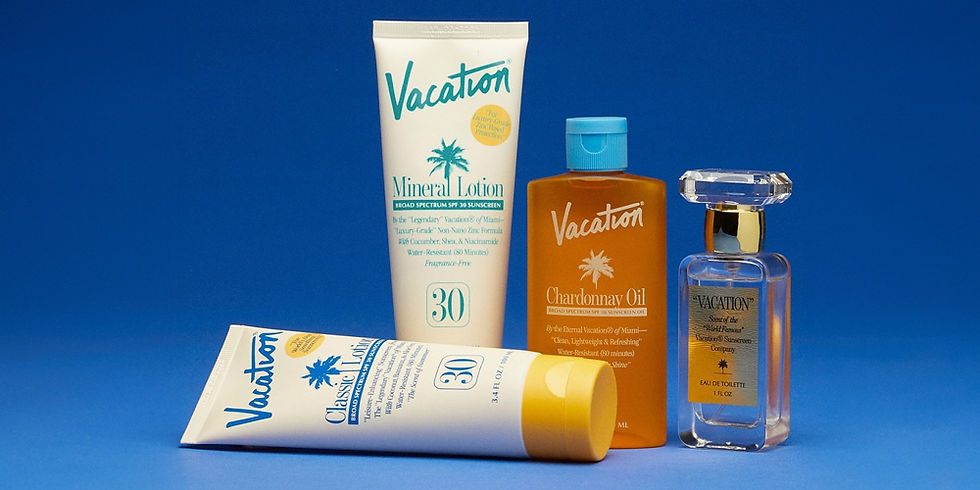
The numbers describe a machine that kept compounding: roughly US$4 million in sales in 2022, US$19 million in 2023, US$48 million in 2024, with gross sales reportedly on track to triple again in 2025. Against that trajectory, the capital story is the sharpest part of the Graza olive oil case. Vacation, the sunscreen brand we broke down last week, is considered capital-efficient at about US$11 million raised. Graza built a US$240 million brand on barely a quarter of that. When the packaging is the marketing, the marketing budget can stay close to zero.
The Origin Story: A Spanish Kitchen, a Shower Thought and a Village Called Grazalema
Graza exists because of a December 2019 trip. Andrew Benin, then working through stints at consumer startups after years at Warby Parker and Casper, visited his now-wife's family in Spain and tasted an olive oil that reset his sense of what the product could be. He spent the following months on a self-designed tasting tour through Spanish olive country. The brand is named after Grazalema, the small village in Cádiz where that tour began. The famous form-factor moment came later, in the shower, holding a squeeze bottle of Dr. Bronner's soap: everyday packaging for something used every day.
Two details in the origin story explain the brand's discipline. The first is a piece of advice from Benin's mentor, Michael Anthony, the chef behind the Michelin-starred Gramercy Tavern, who tasted the oils Benin brought back and told him not to build a luxury brand: the job was to make great oil available to as many people as possible. That sentence is visible in every pricing and packaging decision Graza has made since. The second is who actually carried the brand culturally. The creators who turned a green bottle into a kitchen status object, and the home-cook audience that followed them, are overwhelmingly women. Like Vacation's resort world and Glossier's community, Graza is another case of a brand built by founders who understood that the female-led corner of the internet where cooking, taste and identity intersect is not a niche audience. It is the market.
The external validation caught up in 2025, when industry outlet NOSH named Graza its Brand of the Year, citing category-leading sales velocity and a year of product and packaging innovation.

What Emerging Brands Should Take From This
First, packaging is positioning, not decoration. Graza did not out-formulate the incumbents. It changed what the container tells the user to do, and that single change altered usage frequency, repurchase rates and social visibility at once. For emerging brands in commoditized categories, the honest question is not "how is our product better" but "what does our pack instruct people to do with it."
Second, naming can replace education. Supergoop spent years teaching Americans to rethink sunscreen through content and evangelism. Graza compressed the same job into two words on a label. Drizzle and Sizzle are a use-case taxonomy disguised as branding, and they cost nothing to deploy at shelf. Category confusion is a tax on every purchase; the brand that removes it collects the margin.
Third, cultural pull is a channel strategy, not a marketing flourish. Graza's 300 packages did the work of a national sales team because the product was designed to perform on camera. For Chinese consumer brands looking at the US market, this is the transferable part: the brands winning American grocery shelves right now are not winning on advertising weight. They are winning by being adopted as props in the daily content of a creator economy, and then letting retail chase what consumers already want.
Double V is a cross-border operating partner and intelligence house for emerging consumer brands, based in Hong Kong and Shenzhen. We help brands connect China and the world through three businesses: Brand Operation (marketing and distribution for brands on retainer), Brand Incubation (sister company Glam Infinite and our own-built brands), and Industry Intelligence (cross-border research and reports). Talk to our team.


Comments