
Xiaohongshu Solo Living: How China's 'New Solo Dwellers' Are Rewriting the Brand Seeding Playbook
Key Takeaways
Xiaohongshu's #独居生活 (solo living) hashtag gained over 400 million views in 90 days, making it one of the platform's fastest-growing lifestyle topics in early 2026.
China now has an estimated one in four Chinese households (up from 12% in 2010) (2020 census figure), roughly 25% of all households, a figure that has doubled since 2010.
Solo living content has shifted from aspirational "aesthetic one-person meals" to raw, unfiltered scenes: floor mattresses, stovetop hot pot, and lying flat anywhere at home.
Brands like RIO, Heytea, and Faroro are succeeding by designing for solo rituals rather than pushing lifestyle upgrades, following the logic of "built for me" (适我化).
Japan's ohitorisama economy offers a roadmap: when solo living is normalized, brands win by dignifying the single occasion, not by selling aspiration.
On Xiaohongshu, the most-liked solo living post of early 2026 was not a beautifully plated single-serve dinner. It was a woman eating instant noodles from the pot, sitting on the floor, watching a drama on her phone propped against a shoe rack. The comments section was not sympathetic. It was celebratory. "This is the most honest content I've seen all year," read the top reply, with over 50,000 likes.
This scene captures a shift that data platform Qiangua (千瓜) documented in its April 2026 trend report: the #独居生活 (solo living) hashtag on Xiaohongshu surged by over 400 million views in 90 days. But the content driving those numbers looks nothing like what "solo living" meant two years ago. The polished one-person kitchen, the perfectly arranged reading nook, the carefully curated self-care evening: these are giving way to what Chinese internet users now call "返祖现场" (ancestral reversion), a playful term for the primal comfort of sleeping in a nest of blankets on the floor, cooking hot pot directly on the stove, and lying flat wherever the mood strikes.
For brands selling into China, this is not just a content trend. It is a signal that the consumption logic of over one in four Chinese households (up from 12% in 2010) is evolving rapidly. The question is no longer how to sell "premium solo living." It is how to sell products that feel like they were designed by someone who actually lives alone.
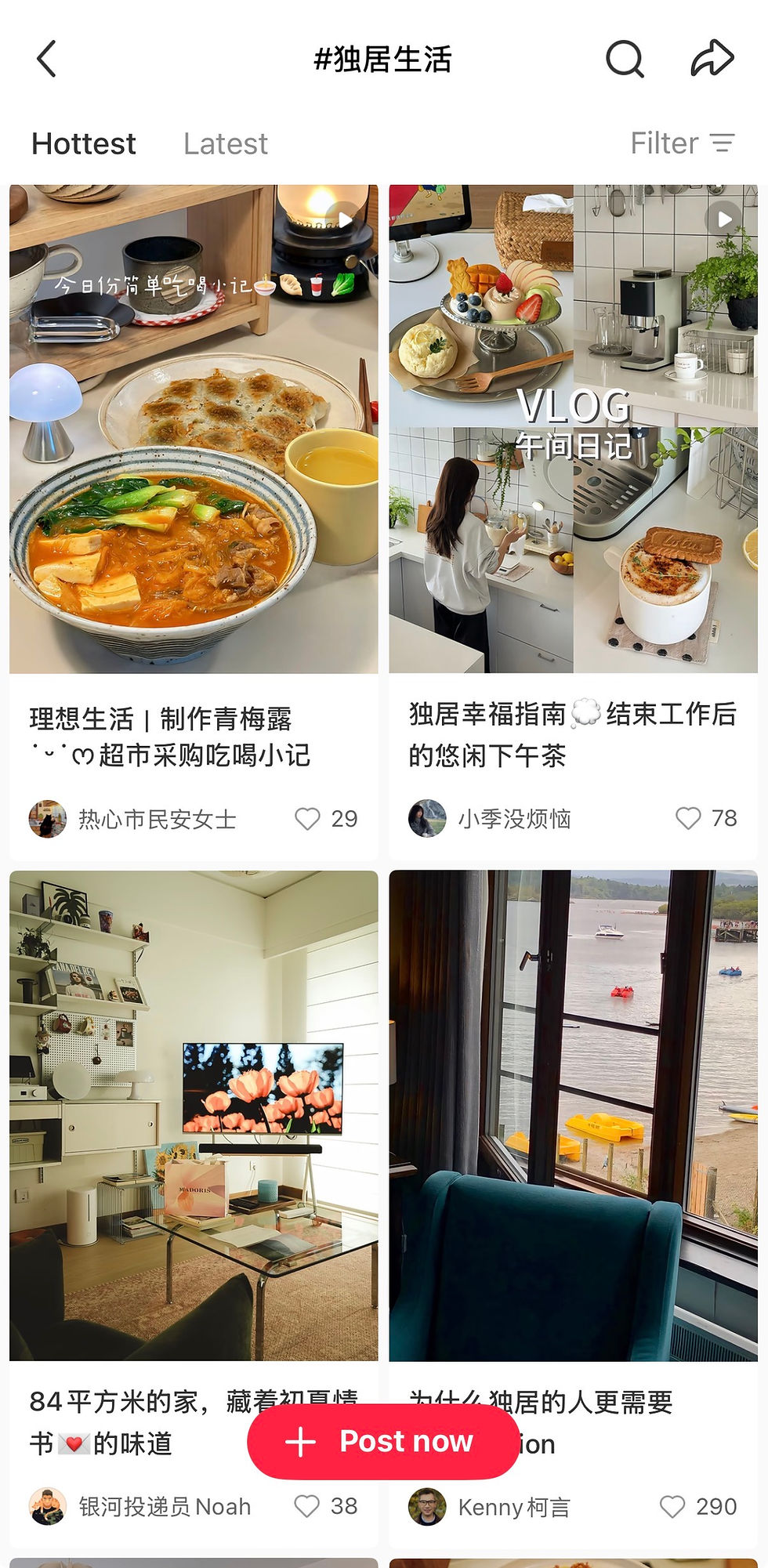
Why Does Solo Living Matter for Brands in China?
The demographic driver is unmistakable. China's single-person households now account for roughly one in four homes, up from approximately 12% in 2010. That represents an estimated 125 million people living alone, a population larger than Japan's entire population. The growth is fueled by delayed marriage (average first-marriage age now hovers around 28 to 30), rising urbanization that pulls young workers to tier-1 and tier-2 cities, and a cultural shift in which living alone is increasingly framed as a choice rather than a circumstance.
This is not a niche. It is the fastest-growing household type in the country. And their spending patterns diverge meaningfully from couple or family households: urban solo dwellers tend to spend 10 to 20% more per capita on discretionary categories including dining, personal care, home decor, and entertainment. They are not saving for a wedding or a child's education fund. They are spending on themselves.
Xiaohongshu, with its 300 million monthly active users and its position as China's dominant lifestyle discovery platform, has become the natural home for this conversation. The platform's 2026 trend report highlighted "self-pleasure" consumption as a defining theme, and solo living sits squarely at the center of that shift.
How Has Xiaohongshu Solo Living Content Changed?
Qiangua's report dissects the trend across three dimensions: eating, dwelling, and playing. Each reveals a consistent pattern: the solo living aesthetic is moving from performance to authenticity, echoing a broader shift in what content actually performs on Xiaohongshu today.
Eating: from ritual to "just feeding myself." The earlier wave of solo dining content on Xiaohongshu was defined by careful plating, matching tableware, and the phrase "一人食" (one-person meal) styled like a magazine spread. The current wave has inverted this. Popular posts now feature what creators call "自在干饭" (eating freely): no matching plates, no table sometimes, and portions that prioritize satisfaction over presentation. The underlying message is not "I eat beautifully alone" but "I eat however I want because no one is watching."
Dwelling: the home as "life headquarters." Solo apartments on Xiaohongshu are being reimagined around a single principle: remove whatever you do not use. The most visible sub-trend is "去卧室化" (de-bedroom-ification), where solo dwellers eliminate the traditional bedroom entirely, placing a low platform bed or futon in the living area and converting the bedroom into a hobby room, a home gym, or simply more open space. Related content includes "一人过节" (celebrating holidays alone), reframing Spring Festival, Mid-Autumn, and even Valentine's Day as occasions for self-directed rituals rather than family obligations.
Playing: from self-improvement to self-comfort. An earlier generation of solo living content promoted the "独居上进三件套" (solo self-improvement trio): reading, exercising, and learning a new skill. The 2026 version has replaced this with interest-driven comfort: building bead art (拼豆), decorating "pain rooms" (痛房, rooms wallpapered with anime merchandise), and what might be the most charming micro-trend: "浴室KTV" (bathroom karaoke), where solo dwellers turn their shower into a private concert venue.

Which Brands Are Winning in the Xiaohongshu Solo Living Space?
The brands gaining traction in this space share a common approach: they design for the solo occasion rather than marketing solo living as a lifestyle aspiration. Five cases illustrate distinct strategies.
RIO: owning the "party of one" ritual. RIO's "微醺" (slightly tipsy) line, featuring 3% ABV fruit cocktails, has become perhaps the most iconic solo-living product in China. The brand's positioning is explicit: this is a drink for one person, at home, in the evening. Campaign films starring actress Zhou Dongyu romanticized the act of drinking alone, not as lonely but as luxurious. On Xiaohongshu, RIO content frequently appears alongside solo living tags, with users sharing their own "微醺夜" (tipsy evening) setups. RIO accounts for roughly 88% of parent company Bairun's revenue, which reached RMB 3.01 billion in 2024, and the brand has retained its leadership position in China's low-alcohol RTD category despite broader market saturation.
Heytea: reframing a group activity as a solo indulgence. Heytea encouraged Xiaohongshu users to pour milk tea into wine glasses, an absurdly simple hack that transformed an ordinary takeout purchase into a solo celebration moment. The brand did not create a new product. It created a new context, one that only makes sense when you are alone and performing for no one but yourself. This kind of KOC seeding combined with aesthetic photography is core to how Heytea cultivates aspiration on Xiaohongshu, with users adding their own variations: champagne flutes for fruit tea, brandy snifters for cheese tea.
Faroro: designing furniture for how solo dwellers actually live. Faroro's platform beds are a direct product response to the "de-bedroom" trend. By lowering the bed to near-floor level and integrating storage underneath, the brand addressed a functional need (small apartment optimization) while aligning with an aesthetic preference (the cozy, grounded living space that solo dwellers on Xiaohongshu favor). The seeding strategy relied heavily on KOC (key opinion consumer) reviews showing the bed in real solo apartments, not in styled showrooms.
Leader (Haier sub-brand): embedding entertainment into utility. Leader's Bluetooth-enabled water heater, marketed as a "bathroom KTV" device, is a case study in meeting consumers where their joy already exists. Solo dwellers were already singing in the shower. Leader simply gave them better speakers and a product story that acknowledged the behavior without condescension.
Boox: the quiet companion. Boox's color e-reader found a natural home in solo living content as "宅家追漫" (staying home reading manga) became a popular post category. The product fit was organic: a device designed for one pair of eyes, used in bed or on the couch, requiring no social justification.

What Can International Brands Learn from Japan's Solo Economy?
China's solo living economy is not developing in isolation. Japan's "ohitorisama" (one-person) culture offers the most instructive parallel, as an economy where solo consumption has been normalized for over a decade.
Japan's solo economy now spans dining, travel, karaoke, and public bathhouses at meaningful commercial scale and has continued to expand. Single-person households are projected to reach 40% of all Japanese households by 2040, and the infrastructure has adapted accordingly: solo karaoke booths (hitokara), solo dining counters (ichiran-style ramen bars), and solo travel packages are mainstream commercial offerings. South Korea has followed a similar path, with the "honbap" (eating alone) culture spawning dedicated restaurant formats.
The lesson for international brands entering China is that solo living is not a temporary content trend. It is a structural demographic shift with single-person households projected to be the fastest-growing household type globally. Brands that have succeeded in Japan's ohitorisama market share three characteristics: they design single-serve or single-use formats without making them feel like "lesser" versions of family sizes; they dignify the solo occasion rather than treating it as a compromise; and they build product narratives around personal choice rather than circumstance.
How Should Brands Approach Xiaohongshu Solo Living Seeding?
The Qiangua report's core insight is that solo living consumers operate on a logic of "适我化" (adapted to me), a term that captures something more specific than personalization. It means: I will buy things that fit the way I already live, not things that promise to upgrade the way I live. This is a meaningful distinction for brand strategy.
The shift from "teaching you how to live" to "understanding your joy" has three practical implications for Xiaohongshu seeding:
Design for real solo occasions, not aspirational ones. RIO's success came from acknowledging that people drink alone on weeknights, not from inventing a glamorous "solo cocktail hour." Similarly, brands entering this space should study actual solo behaviors on the platform (eating from the pot, sleeping on the floor, singing in the shower) and ask whether their product naturally fits those moments.
Use KOCs over KOLs for authenticity. The solo living content that performs best on Xiaohongshu is not polished influencer production. It is everyday people showing their undecorated apartments and unremarkable routines. Brands like Faroro gained traction through KOC seeding in real apartments, not through aspirational KOL partnerships. This mirrors the wider nostalgia-driven aesthetic shift among Chinese youth toward more grounded, lived-in content. For international brands accustomed to working with top-tier influencers, this requires a recalibration of both budget allocation and creative control.
Build for one, not for half of two. Too many product lines treat single-serve as a scaled-down version of a family product. Solo consumers notice this. The brands winning in this space, from Japan's convenience store bento boxes to China's RIO cans, design products that feel complete at the individual level, with packaging, portions, and pricing that do not signal compromise.
Double V is a cross-border operating partner and intelligence house for emerging consumer brands, based in Hong Kong and Shenzhen. We help brands connect China and the world through three businesses: Brand Operation (marketing and distribution for brands on retainer), Brand Incubation (sister company Glam Infinite and our own-built brands), and Industry Intelligence (cross-border research and reports). Talk to our team.


Comments