
Topicals Skincare: How 'Funner Flare-Ups' Built Sephora's Fastest-Growing Brand
Beauty marketing spent a century selling perfect skin. Topicals sells something closer to a truce with imperfect skin. Launched in August 2020, the Los Angeles brand made products for eczema, hyperpigmentation and ingrown hairs, and talked about them the way group chats do, not the way dermatology leaflets do. Five years on, it has been called the fastest-growing skincare brand at Sephora, selling one product every minute in 2022, and its founder Olamide Olowe became the youngest Black woman ever to raise over US$10 million in venture capital. The interesting part is not the speed. It is that the growth came from the exact customers the industry had spent decades ignoring.

WHO: Who Is Buying Topicals Skincare?
Topicals was built for the one in four Americans who experience chronic skin conditions, the eczema, psoriasis and hyperpigmentation customers whom prestige skincare treated as a medical niche. The founding insight was that this niche is actually the mainstream: as Olowe frames it, some 80 percent of people have hormonal issues, sun damage or are a person of color, all of which show up on skin.
The core buyer is Gen Z, reached through TikTok and Instagram rather than counters and dermatologists. The brand formulated first for melanin-rich skin, where hyperpigmentation is most stubborn and clinical testing has historically been thinnest, but the audience did not stay narrow. While a large share of its customers are Black, the majority now span, in Olowe's words, a ton of ethnicities. Her thesis is that products that work for darker skin tones simply work better for everyone. Inclusivity here is a formulation standard, not a casting choice.
WHAT: What Do the Products Actually Do?
The catalogue is short and condition-led. Faded, a serum for dark spots and post-acne marks, is the hero: the bestseller of a ten-product Sephora US assortment priced between US$16 and US$38, and stocked in all 500 US Sephora doors. Around it sit Like Butter, a mask for eczema-prone skin, High Roller for ingrown hairs, and Faded extensions from under-eye masks to peel pads. Nothing is positioned as anti-aging. Everything is positioned against a specific, nameable flare-up.
Retail proved the thesis fast. At launch in October 2020 the range sold out within 48 hours at both Nordstrom and Sephora, in a hyperpigmentation category that analysts expected to grow from US$387.7 million in 2020 to US$677.4 million by 2027. Distribution has since widened to Sephora Canada and the UK, Amazon in the US, and, from late 2025, France, while remaining in essence a one-retailer prestige story. That concentration is efficient, and it is also a risk the brand has yet to hedge.
WHY: Why Does the Playbook Work?
Start with the language. Olowe's stated goal was to change the narrative around chronic skin conditions and celebrate funner flare-ups, which turned a shame category into a community one. The commitment is structural: the company pledged 1 percent of profits to mental health organizations and had donated over US$50,000 by late 2022, alongside a US$10 million Series A led by CAVU Consumer Partners, with backers including Jay-Z's Marcy Venture Partners, Kelly Rowland and Gabrielle Union.
Then the marketing, which reshaped an entire industry habit. Topicals took influencer travel, a format associated with luxury excess, and recast it: its Bermuda trip generated 3 million impressions, and its Ghana trip with twelve BIPOC creators drew 5.6 million TikTok views, with casting built around creators who live with the conditions the products treat. The trips read as representation rather than reward, and the numbers behaved accordingly. Growth followed: revenue tripled in 2021, then grew 657 percent year over year in 2022, the year the company reached profitability, with 2023 revenue projected at US$20-30 million.
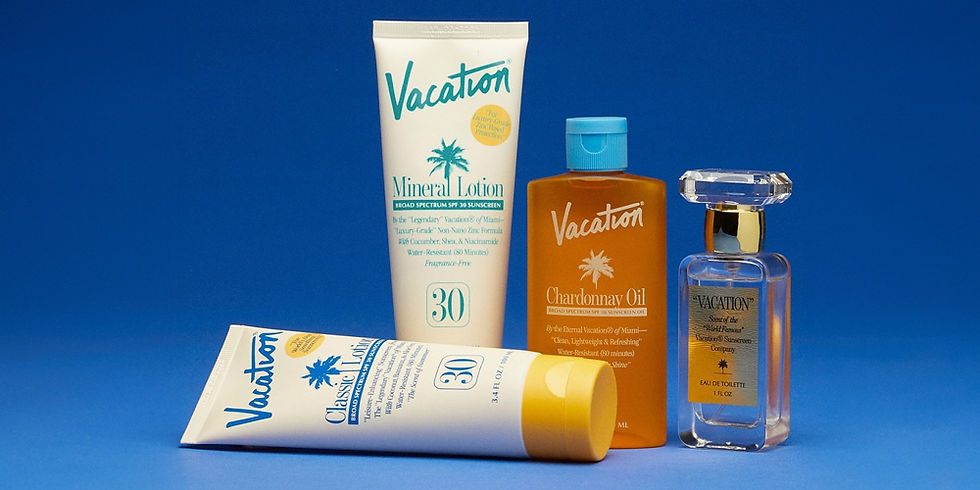
The closest cousin in our breakdown series is Starface, which made acne visible instead of hidden. Both brands monetize destigmatization. But where Starface turned the patch into a fashion accessory, Topicals kept clinical seriousness under the playful surface, science-backed formulas wrapped in a voice that jokes. It is the same trick Vacation pulled in sunscreen: category-standard efficacy, category-breaking emotional register.

HERSTORY: Why Does the Founder Story Matter?
Olamide Olowe was 23 at launch. At UCLA she had co-founded SheaGIRL, a sub-brand of SheaMoisture, which sold to Unilever as part of the Sundial Brands acquisition in 2017, giving her a rare pre-25 exit apprenticeship. She started Topicals with co-founder Claudia Teng, whose background was in dermatology clinical research, and raised US$2.6 million before launch from Lerer Hippeau and angels including Bozoma Saint John, Issa Rae and Yvonne Orji, one of the largest seed rounds a Black woman had raised in beauty at the time.
The story has kept compounding. In January 2026 the brand added funding from basketball star Angel Reese and Afrobeats artist Rema, bringing total funding since its 2020 launch to US$22.6 million, with Rema advising on reaching younger male customers. Olowe has meanwhile built a holding company, Cost of Doing Business, and acquired the indie brand Bread Beauty Supply, funding it personally and speaking openly about products that flopped. In a founder economy that sells only wins, that candor is itself brand equity, and it explains why Topicals reads as credible to a customer base allergic to marketing gloss.
What Should Emerging Brands Take From Topicals?
Three lessons carry. First, the underserved segment is often the mainstream mispriced: a quarter of Americans with chronic skin conditions is not a niche, just an audience that was never treated as fashionable. Second, emotional register is a moat: competitors can copy a formula long before they can copy a voice that makes a medical condition feel like belonging. Third, community spend beats media spend when the community is real; the brand's trips, ambassadors and mental-health commitments all put money where the positioning is.
For Chinese brands eyeing the West, Topicals is also a case study in how prestige retail rewards a sharply defined audience, something worth studying before defaulting to mass channels. The open questions are real: one retailer carries most of the prestige story, the founder carries most of the narrative, and the hyperpigmentation category she validated now crowds with followers. But five years in, Topicals skincare has done the hard thing. It made a stigmatized condition a reason to buy, and made the customer feel like the brand was built for her, because it was.
Double V is a cross-border operating partner and intelligence house for emerging consumer brands, based in Hong Kong and Shenzhen. We help brands connect China and the world through three businesses: Brand Operation (marketing and distribution for brands on retainer), Brand Incubation (sister company Glam Infinite and our own-built brands), and Industry Intelligence (cross-border research and reports). Talk to our team.


Comments