
The Honey Pot: How a Vaginal Care Brand Went From One Whole Foods Shelf to a US$380 Million Deal
In October 2024, The Honey Pot began selling through Ulta Beauty. Twelve products went live on Ulta.com, and by the end of that December they had reached the wellness section of 68 stores. It was the brand's first beauty retailer after a decade of grocery shelves, and it arrived eight months after a private equity buyer valued the company at US$380 million.
The interesting part of that story is not the exit, it is the order of operations. Most direct-to-consumer brands in women's health build an audience online and then spend years persuading one retailer to take them seriously. Beatrice Dixon did it the other way round: she sold 600 bottles at a trade show, got into Whole Foods, then Target, then Walmart, and reached roughly 33,000 US retail doors before she built the loyalty program and the content engine that most DTC brands start with.
WHO: Who Is The Honey Pot Actually For?
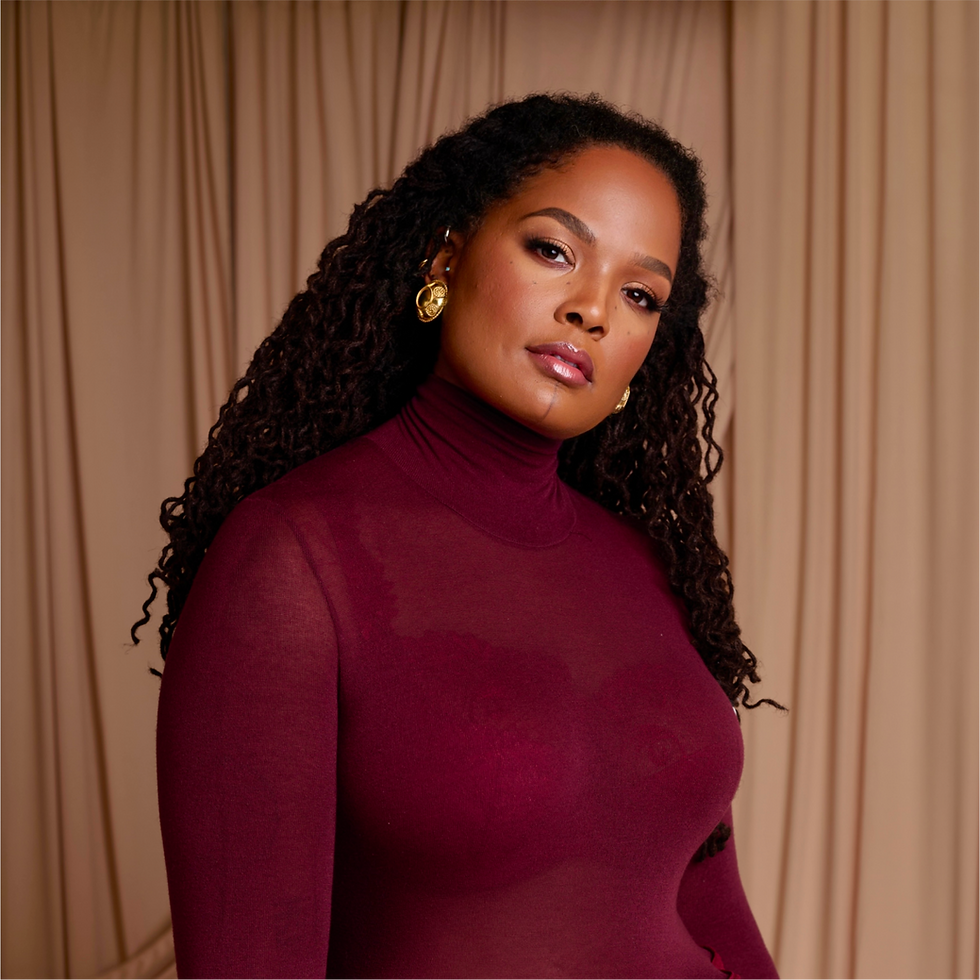
The customer is not the prestige beauty shopper. She buys in the grocery aisle, at a price that rarely crosses US$11, and she is buying a wash, a liner or a pad rather than a serum. The brand's own line is "made by humans with vaginas, for humans with vaginas", a deliberately wide frame that includes the person who would never describe herself as a beauty customer.
The scale of that audience is best read from two numbers Compass Diversified published when it bought the business. The Honey Pot was the fifth-largest feminine care brand in US retail, excluding private label, in the 52 weeks to 30 December 2023, according to Nielsen data cited in the deal materials. Its household penetration, however, was only about 4.5 percent, per Numerator.
That gap of a top-five position on 4.5 percent penetration is not a contradiction, and it says something useful about the category. Feminine care is a market where almost every household buys something, and where most of the volume moves through mass brands chosen on price and availability. Being number five in retail means The Honey Pot has taken a visible share of a very large, very low-engagement purchase. It also means there are tens of millions of households the brand has never reached, which is precisely the argument a buyer wants to hear.
The other thing to notice is what the buyer is being sold. It is not a beauty customer upgrading, it is a woman in a category nobody enjoys shopping, offered a version that feels less like a pharmacy and more like something she chose. Cakes Body built a US$95 million business on a similar insight, that the unglamorous part of a woman's wardrobe is where the unmet demand sits.
WHAT: What Does The Honey Pot Sell, and What Is It Really Claiming?
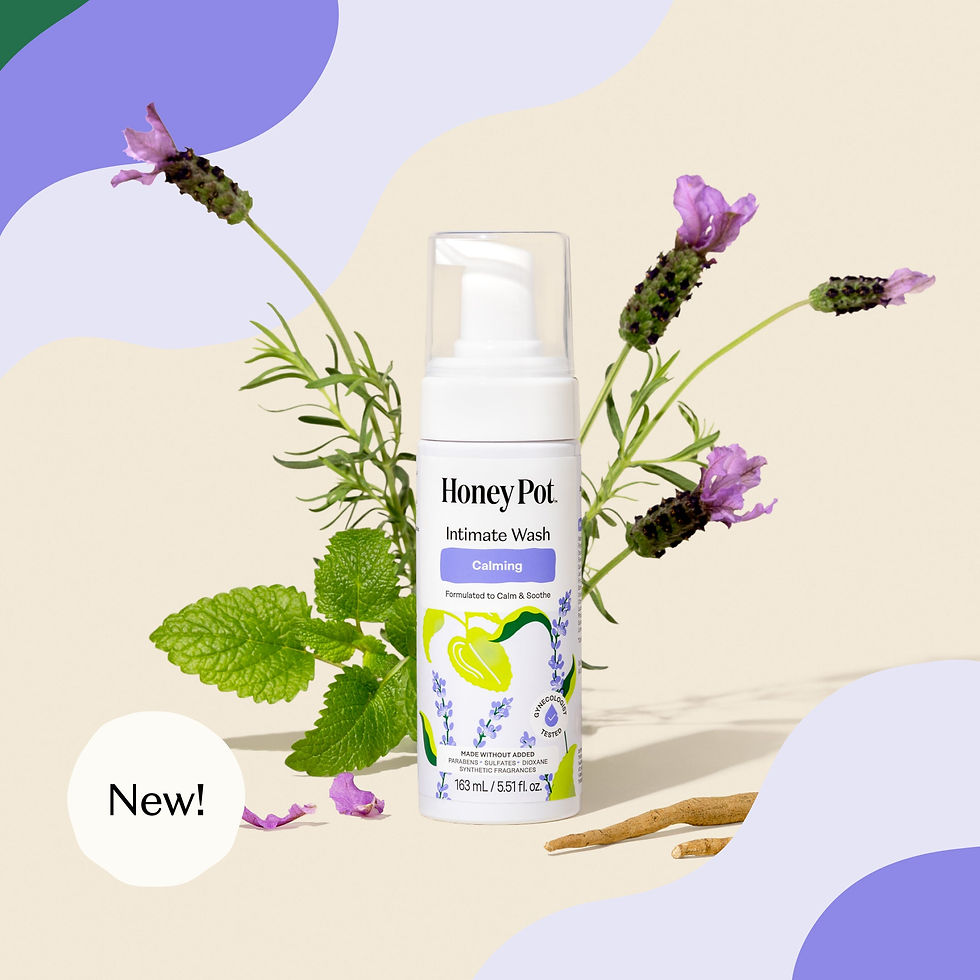
The Honey Pot sells across four categories: personal care (washes and wipes), menstrual care (pads, liners and tampons), consumer health (supplements) and sexual wellness. That adds up to more than 60 products. Single items run from US$7.99 to US$22.98, with a sensitive intimate wash at US$10.99, organic cotton pads at US$9.99 and herbal suppositories at US$19.99. Bundles top out around US$36.
The ingredient story is consistent across the range: plant-derived lactic acid, apple cider vinegar and aloe; no added parabens, sulfates or dioxides; OCS-certified organic cotton; BPA-free applicators; a pH-balanced formulation. The products carry gynecologist and dermatologist approval, which is a meaningful signal in a category where shoppers have no way to evaluate the chemistry themselves.
What the brand is selling, though, is not better medicine. It is permission. Ask most gynecologists and they will tell you that a wash is not a medical necessity for the average person, which is why the category has spent decades stuck between two unappealing positions: the clinical-sounding drugstore bottle and the shame wrapped around the whole aisle. The Honey Pot's proposition is that the product can be pleasant, look like something you would leave on the counter, and carry no embarrassment. That is an emotional claim, not a chemical one, and it is the reason the brand could charge US$10.99 for something the person next to it is buying for US$4. Starface made the same trade in acne care: take a commodity product, and compete on how it makes the buyer feel about a condition she is told to hide.
The claim has been tested in court twice, and the outcome is worth stating precisely. A 2023 class action in New York challenged the "gynecologist-approved" and daily-use claims on four washes; the court dismissed it in March 2024, finding that the plaintiffs had not shown the statements would mislead a reasonable consumer. A separate 2024 case in California argued that calling products "plant-derived" was misleading because some components are chemically processed; the plaintiffs withdrew it voluntarily in March 2025. Neither case produced a ruling on whether the products are safe, and neither ended in a settlement.

WHY: Why Did Retail-First Beat the Standard DTC Playbook?
Look at the door count and the strategy explains itself. The Honey Pot entered Target in 2017 with about 1,200 stores, a figure that had reached roughly 5,500 by 2019 and about 9,000 by 2020. When Walmart took the brand in 2019, it went into close to 1,930 stores at once. By 2023 the total stood at about 33,000 doors, and the Ulta launch added a beauty channel on top of grocery, drug and mass.
Retail gave the brand three things that advertising would have cost far more to buy: credibility with a shopper who had never heard of it, volume without an acquisition budget, and a shelf position next to the category leader. What retail does not give you is a relationship, and that is where the second half of the model sits. The Hive, the brand's loyalty program, awards two points per dollar spent online and one point per dollar for receipts uploaded from physical stores, with 100 points worth US$10. That receipt mechanic matters more than it looks: it is how a wholesale business learns who its customers are.
On social, the brand chose character over reach. In 2021 it introduced Miss Pussy P, an animated character used to explain gynecological exams, heavy periods and yeast infections in plain language, work that won a Gold Honor in Instagram Presence at the 15th Shorty Awards. As of 2022 the brand had about 413,000 Instagram followers and 46,700 on TikTok, and its chief marketing officer told Digiday that paid social had become too inefficient to lead with, with measured ad spend of roughly US$334,000 that year, a rounding error by beauty industry standards.
That groundwork is the reason the worst week in the brand's history became its best argument. On 4 February 2020, Target ran a The Honey Pot commercial in its Founders We Believe In series, in which Dixon said that the brand succeeding would mean the next Black girl with a good idea could have a better opportunity. Anonymous accounts responded by flooding Trustpilot with one-star reviews, an influx the platform called large enough to suspend the brand's page while its content integrity team investigated, most of them arguing the brand was exclusionary. Supporters then pushed the rating back, with Dixon telling CNN the average climbed from two stars to 4.9 within a day.
The commercial had already lifted sales by 20 to 30 percent across retailers, and on the day the backlash peaked, Dixon said the increase ran to 40 or 50 percent. Those figures come from the founder and were reported by CNN, BuzzFeed and Forbes; they are not audited numbers. The mechanism behind them is what matters: a brand with no community would have been left defending a slogan for a week. A brand that had spent four years building one could let its customers answer. The same dynamic cut the other way in 2022, when a reformulation triggered accusations in the comments that the founder had quietly sold the company, which she denied at the time.
HERSTORY: What Beatrice Dixon Built, and What It Took
Dixon's starting point was not a market gap. It was seven or eight months of bacterial vaginosis and recurring yeast infections, and a course of antibiotics that kept failing to end them. She was working in the Whole Body department at Whole Foods at the time and had spent about eight years as a pharmacy technician before that, so she had both access to ingredients and a working sense of what the shelf looked like.
The recipe, in the version she has told many times, arrived in a dream: her late grandmother appeared with a list of ingredients, including coconut oil, apple cider vinegar, rose water, lavender, water and garlic. She bought them at Whole Foods the next morning. She began formulating in her apartment kitchen in 2012 and incorporated the company in Atlanta in 2014, after a weekend selling 600 bottles at Bronner Bros., a beauty trade show, convinced her there was a business there. She paid for that first run largely out of her own pocket, and later borrowed US$21,000 from her brother Simon Gray, who also brought in most of the early investors. Around US$700,000 went into getting the brand to the point where Target would take it, and she kept her day job until it did.
The next stage is a list of dates. Whole Foods was the first retailer to stock the brand, and it was the buyer at Whole Foods who eventually connected her to Target. New Voices Fund, the US$100 million vehicle founded by Richelieu Dennis, invested in 2018. Revenue grew about 382 percent in 2019, to the roughly US$20 million the company was then willing to discuss. Between 2020 and 2023 gross sales compounded at 54 percent a year, reaching an estimated US$121 million in 2023 with adjusted EBITDA of about US$29 million on management's pre-deal estimate.
On 31 January 2024, Compass Diversified closed its purchase of about 85 percent of the business at a US$380 million enterprise value, against a credit facility from which about US$110 million was drawn at close. The co-founders and management team invested alongside the buyer and retained a significant minority stake, with Dixon staying on as chief executive and chief innovation officer. Under its new owner net sales rose 33.6 percent to US$139.7 million in 2025, with adjusted EBITDA up 41 percent to US$34.8 million.
Two things are worth holding together at the end. The first is the runway: a business at the top five of its category, still sitting at 4.5 percent household penetration, inside a market Compass Diversified puts above US$17 billion a year. The second is the tension. The more The Honey Pot becomes a shelf product competing with a US$4 bottle, the more it will be judged on the one question the category has never answered well: whether the product is necessary. What Dixon built in the twelve years before the sale was an answer to a different question, about how the category should feel. The next phase will test how long that answer holds on someone else's balance sheet.
A founder-led brand that sells does not usually lose its product, it loses control of the position. Drunk Elephant kept the formula and lost the argument. Whether The Honey Pot holds its own version of that line is what the next five years will answer.
For anyone building in a stigmatised category, the sequence is the lesson. Own the shelf before you own the feed, keep the founder visible enough to be attacked and defended, and treat the community as the asset that shows up when the reviews turn. The Honey Pot did not win because it had the better formula. It won because it had somewhere for its customers to go.
Double V is a cross-border operating partner and intelligence house for emerging consumer brands, based in Hong Kong and Shenzhen. We help brands connect China and the world through three businesses: Brand Operation (marketing and distribution for brands on retainer), Brand Incubation (sister company Glam Infinite and our own-built brands), and Industry Intelligence (cross-border research and reports). Talk to our team.


Comments